
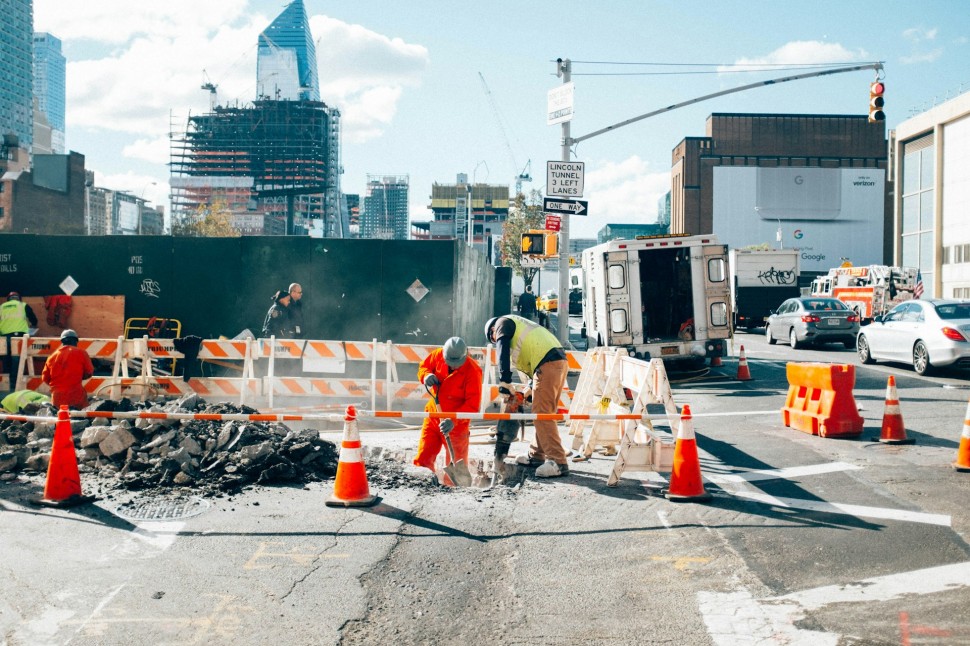
New York City construction is at the center of one of the largest building cycles in the city's history. The expansion of the Hudson Yards district, the Penn Station rebuild, the continuing migration of office space from Midtown to the Far West Side, and a steady volume of multifamily residential development across all five boroughs have produced thousands of active construction sites and tens of thousands of construction workers on the job at any given time. With that volume comes an unavoidable reality: construction is among the most dangerous occupations in the United States, and New York City's particular building density, height, and pace make its construction sites especially complex.
For attorneys representing construction accident victims, and for the workers and families behind those cases, several developments are reshaping how New York construction litigation is being handled in 2026.
The Foundation: New York Labor Law Sections 240 and 241
New York's "scaffold law," codified at Labor Law section 240, remains the single most important statutory provision for construction accident plaintiffs. The law imposes absolute liability on owners and general contractors for injuries to workers caused by elevation-related hazards, including falls from heights and falling object incidents.
The absolute liability framework is unusual. Unlike most negligence theories, section 240 does not allow comparative fault defenses based on the worker's own conduct. So long as the statutory protections were not provided, and the inadequate protection caused the elevation-related injury, the owner and general contractor are liable. The rule reflects a legislative judgment, repeatedly reaffirmed by the New York Court of Appeals, that parties with the most control over construction site safety bear the legal risk when that safety fails.
Labor Law section 241(6) extends similar protections to a broader range of construction site hazards. Plaintiffs invoking section 241(6) must identify a specific violation of the Industrial Code, and comparative fault analysis does apply, but the statute provides another important basis for recovery.
Information about New York labor law enforcement is available through the New York State Department of Labor.
Developments Shaping Construction Litigation in 2026
Several trends are reshaping how construction cases play out in New York City this year.
Federal OSHA enforcement priorities have shifted. The Occupational Safety and Health Administration has continued its emphasis on fall protection violations, trenching and excavation hazards, and crane safety. OSHA citations and abatement records have become important evidence in subsequent civil litigation.
Crane and rigging incidents have produced significant cases. The Manhattan high-rise environment has produced a steady volume of serious crane-related injuries. The New York City Department of Buildings has tightened crane operator certification and oversight requirements.
Subcontractor coordination remains a central issue. The typical New York construction project involves dozens of subcontractors operating on the same site, sometimes under conflicting schedules and with limited coordination of safety practices. Cases involving subcontractor employees often raise complex questions about who bears responsibility under sections 240 and 241(6).
Coverage from outlets including the New York Daily News has consistently documented the volume and severity of New York construction accidents, including the fatal incidents that have prompted regulatory responses and high-profile litigation.
For an experienced perspective on these cases, Shulman & Hill Law handles construction accident, premises liability, and catastrophic injury matters across New York City, with particular experience in section 240 and section 241(6) litigation involving falls, falling objects, and elevation-related hazards.
Defendants and Coverage Analysis
A typical New York construction accident case involves a complex web of potential defendants and insurance coverage. Identifying the right defendants early shapes the entire case strategy.
The general contractor and project owner are the primary section 240 defendants. Their liability for elevation-related injuries is absolute, and arguments about contributory conduct generally do not apply.
The plaintiff's direct employer is typically barred by workers' compensation exclusivity. The workers' comp claim runs in parallel and provides medical and wage benefits, but the civil case proceeds against the third parties.
Other subcontractors on the site may have created the hazardous condition. Their liability is analyzed under negligence principles, and contractual indemnification clauses between subcontractors and the general contractor often determine how the loss is ultimately allocated.
Equipment manufacturers and lessors may have liability for defective scaffolding, lifts, harnesses, and other safety equipment. Product liability claims against these defendants typically require expert engineering testimony.
Insurance coverage layers vary widely. Wrap-up policies, owner-controlled insurance programs (OCIPs), contractor-controlled programs (CCIPs), and individual project policies all need to be analyzed early.
What 2026 Looks Like for Construction Plaintiffs
For attorneys representing injured workers and for workers themselves, several practical patterns are worth noting.
Settlement values remain robust. Significant cases involving falls, paralysis, traumatic brain injury, and wrongful death continue to produce settlements in the seven and eight figures. The combination of absolute section 240 liability, available insurance coverage, and sympathetic Manhattan and Brooklyn juries supports these outcomes.
Investigation has to start immediately. Construction scenes change quickly. Equipment is moved, evidence is repaired or removed, and witnesses scatter. Preservation letters need to go out within days of a serious incident.
Medical care continuity matters. Construction injuries often involve long-term rehabilitation, multiple specialists, and significant ongoing care needs.
Workers' compensation and third-party claims need careful coordination. Workers' comp liens, Medicare set-aside analysis, and the interplay between the comp case and the third-party action all require attention from the outset.
The Underlying Reality
New York City is going to keep building. Construction accidents are going to keep happening. The legal protections that section 240 and section 241(6) provide remain among the strongest in the country for injured construction workers. For attorneys and accident victims alike, knowing how the framework operates in 2026, where its boundaries are being tested, and how the regulatory environment continues to evolve is the foundation of any effective response to the human cost of the city's construction boom.


